Monday, 3 September 2012

Teaching Science Through Inquiry - Last in the Series

If you teach science and are just now joining the blog, PLEASE go back and read these August 20th & 21st posts before reading this one - A Private Universe - It will change your life! (be SURE to watch the video) and A Private Universe - Second in a Series.
--------------------------------------------------------------------------------------------------------------------
Here's the thing, and oh, my goodness, do you hear Common Core goals of rigor and relevance in every phrase?

"Students at all grade levels and in every domain of science should have the opportunity to use scientific inquiry and develop the ability to think and act in ways associated with inquiry, including asking questions, planning and conducting investigations, using appropriate tools and techniques to gather data, thinking critically and logically about relationships between evidence and explanations, constructing and analyzing alternative explanations, and communicating scientific arguments." 

--------------------------------------------------------------------------------------------------------------------
As promised, in this final post connected to A Private Universe, here is an annotated list of fabulous resources for teaching kids through inquiry:

1. Education.com is dedicated to parents, but who says teachers aren't parents (and parents teachers)? Many of the ideas on the site would be great in a classroom. There are 626 activities and hundreds of ideas for science fair projects, but again, who says they only belong in science fairs?


2. To Exploratorium, I say (with a smile): "There's NO reason these After School Activities have to be done after school!" 


3. Exploratorium's Explore tab takes you to 528 things to make and do, and links to 152 science learning websites!


4. How to Smile is the project of a group of science museums: Lawrence Hall of Science, Exploratorium, New York Hall of Science, Science Museum of Minnesota, and Children's Museum of Houston. Their focus is on science for children in non-classroom settings. I call that a challenge that teachers can meet with non-traditional equipment!!! There are 3,287 math and science activities on this site...need we say more?


5. Inquiry in Action  - The American Chemical Society offers a FREE download of the book Inquiry in Action. It has 7 chapters with 43 hands-on activities PLUS a review of Chemistry Fundamentals with molecular animations for teachers (we all need a refresher from time to time)!


6. The Inquiry Project "takes a unique approach to a study of matter for grades 3-5, bringing together mathematics, science content, and inquiry." The entire curriculum is presented on the website. You can purchase some investigation kits from Sempco, Inc., but most of the items needed can be found easily, and detailed specs for developing your own kits are coming soon. In the Library of Resources, there are very short videos that explain ideas and strategies that will hone YOUR skills in teaching with inquiry. This site is a treasure!


7. Science Buddies has more than 1000 Project Ideas focused on science fairs, but who says that's their only place? While these are not open-ended, there is a "Make it Your Own" section for each that could lead to a higher level of inquiry.


8. The Science Museum was founded in 1857 as part of the South Kensington Museum in the U.K., and gained independence in 1909. Most of us can't take a field trip there, but we can make use of their great Classroom Resources.


9. 24/7 Science is a product of The Lawrence Hall of Science at the University of California, Berkeley. It is simply fantastic. Go. Click on the array of resources. Please. You and your kiddos will be glad.


--------------------------------------------------------------------------------------------------------------------
If, as I hope, you are seeking to raise the level of inquiry in YOUR science class, I highly recommend Simpifying Inquiry Instruction, by Bell, Smetana, and Binns, an article that appeared in The Science Teacher. You will find there a modified version of the four-level model of inquiry, with suggestions for raising the level of a science activity. It is a valuable tool! 

And because I MUST make a reading connection :) - I know that time is at a premium in your classrooms. With that in mind, please consider using some of your reading/language arts block (which, with the implementation of CCSS, must include a large amount of informational text) to integrate science, which should not be left by the wayside!  NSTA, the National Science Teachers Association, has done the research for you. They have, for the past 11 years, compiled lists of Outstanding Science Trade Books for Students K–12. Could you ask for more?


--------------------------------------------------------------------------------------------------------------------
One final note: Please consider joining your state Science Teachers Association, if you haven't already. I was a member of TSTA for years as a science teacher, and I can attest that their annual conference is a wonderful professional development experience. This year's theme is Framing the Common Core. You will make friends and professional connections, and have great resources at your fingertips. Here's an example: an air pressure lesson posted on the website by my friend, Barry Farris. 
--------------------------------------------------------------------------------------------------------------------
 P.S. I hope you're all enjoying your long weekend! I'm leaving tomorrow morning for a relaxing beach trip with 5 of my best girlfriends (one of whom is my only sister, Carole). I may not be posting again until I return, which is why I wanted to get this looong one up before I left. Happy September!

Saturday, 1 September 2012

Books Should Be Free

When I posted about Common Core online text exemplars, I had never seen this site, and I couldn't wait to share it on the blog today:

Books Should Be Free has both ebooks and audiobooks on their site...yes, for FREE! You can search by title, author, or keyword, and there are books of all genres, not just for children. It goes without saying that these are not new books, but many are classics and I saw several of my favorite books from childhood there.

Examples?


Most of the audiobooks can be streamed or downloaded in several formats. They are also available as eBooks for Kindle, etc., or you can read them in your browser.

One note of caution - there is an advertisement in the center of each page, once you have clicked on a book. Many of them look like this

Download a Free Audiobook
100,000+ Titles. Download Now. 
Listen on Your iPod or MP3 Player!

This is not the free download you want. (It is a 30 day trial for Audible.com, which is a great site, but not free.) Instead of clicking on this ad, scroll down to Audiobook Downloads, Stream, and eBook Downloads to make your choice.

I hope you find many, many books that you and your kiddos will enjoy!

Friday, 31 August 2012

Annotated Common Core Standards...and More

With Blogger's statistics page, I'm able to see exactly which learning twice posts are being read most often. When I mentioned to my daughter that the most popular posts were Common Core related, her answer was a polite, "Well, duh." What she actually said was something like, "Of course! It's what everyone is most concerned about this year," but I get it.

Since some of the CCSS are, shall we say, a bit dense, it might help to have them broken down into chunks à la Marcia Tate for your planning and for your students' learning.

If you would like to go from this:
RL.5.2. Determine a theme of a story, drama, or poem from details in the text, including how characters in a story or drama respond to challenges or how the speaker in a poem reflects upon a topic; summarize the text.

to this:
RL.5.2. Determine a theme of a story, drama, or poem from details in the text, including how characters in a story or drama respond to challenges or how the speaker in a poem reflects upon a topic; summarize the text.
  • Students should demonstrate the ability to articulate the theme or central idea of a fictional text, providing specifics from the text to support the response.
  • Students should be able to respond to questions about a character’s motivations and conflicts.
  • Students should be able to articulate how the speaker or narrator’s point of view reveals the theme or central idea of a text.
  • Students should be able to write a summary of the text.
click on over to Kristen Bowers' Teachers Pay Teachers page and download Annotated Common Core Standards for Grades 3 - 12...for FREE!


PLEASE, if you download, leave Kristen a comment thanking her for her work and generosity, and visit her website to see what else she has to offer. She does have items for sale both there and on her TPT page.

Charity Preston, who is recommended by Kristen, also has some amazing Common Core Lesson Planning Packs with cute themes for K though 5th grade for only $5.95 each on her TPT page. They include annotated CCSS, templates for lesson planning, student checklists, "I Can" statements and posters, etc...upwards of 150 pages each...so affordable!

I hope this helps, and I especially wish for you all a wonderful Labor Day weekend - try to rest a little from your dedicated labor, in and out of the classroom, for your kiddos!

Thursday, 30 August 2012

Common Core Standards Checklists

When I find a resource that looks good for middle school ELA, I run it by my daughter, who teaches 7th & 8th grade Reading & Language Arts. Yesterday, she told me she needed checklists that would allow her to note the dates when she taught skills for a particular Common Core standard.


Here's what I found for her, for FREE, at Tori Gorosave's Teachers Pay Teachers page: Common Core Checklist ELA Grade 7, and for $1.00, Common Core Checklist ELA Grade 8.

Though Joanna won't use this, Tori also has a Common Core Checklist ELA Grade 6 for only $1.50.


For YOU, I searched for checklists for younger grades too, and here's what I found:

Fonda Jones, on her TPT page, offers a FREE class checklist for 1st grade ELA. Her other ELA and math checklists, each of which has space for 24 students, are $1.50 each.

Anne Wheeler also has ELA Checklists for K-5th grade for $1 - $1.50, which are not set up as class lists. Her checklists for K-5th math are $1.50 each at TPT.

When you consider the time these teachers have spent putting the documents together, this nominal amount is a real deal. Hope you find just what will work best for you!

Wednesday, 29 August 2012

Common Core: Text Exemplar Activities

I'm so excited to share a fellow Tennessee teacher's fabulous work with you this morning!

Mary P. teaches in Shelbyville, TN, and not only is she a class act, she is willing to share her act with you - activities she has created for these eight of the 2nd and 3rd grade Common Core Text Exemplars!


The activities range from analyzing to discussing to predicting to sequencing to task cards, and SO much more. They would be great to use in literacy stations as well as in small groups and whole class meetings.

Mary offers these FREE downloads at  Pitner's Potpourri, but that's not all! Quick, click over to read her entire blog for other great ideas and more freebies!

I'll let her know I linked to her blog today, and if you download from it, please leave a comment thanking HER. Also, if you know of other folks who are sharing activities for CC exemplars, please let ME know so I can spread the good word!

Tuesday, 28 August 2012

Anchor Charts - Five Essential Features

Persistence pays off....eventually. This morning, I felt like a miner who had discovered a rich new vein! I've been looking for a clear description of what an anchor chart should be, to be most useful for student learning. That's really all that matters in any instructional strategy, right? I found the information below on a wikispace, and finally found the source through some backwards searches. I DO love technology. ;-)

Cornerstone Literacy is "a 501(c)(3) not-for-profit organization that strives to improve literacy outcomes for students in elementary schools serving urban and high-poverty communities by dramatically increasing the number of highly effective teachers." Their website is amazing, packed with research, strategies, and frameworks for literacy and thinking skills. Be sure to go there and check out what they offer for FREE.

Cornerstone's information about Anchor Charts, written by Wendy Seger, is exactly what I've wanted to share with you:

1. An anchor chart should have a single focus. Sometimes a teaching standard is broad by design, such as "Students will write with a clear focus, coherent organization, and sufficient detail." To be able to meet this standard, teachers would have to help students accomplish the many discrete skills that build capacity to meet the writing expectation. Those skills make up the topics of the lessons that are taught in the day-to-day work in the classroom. It is such discrete skills that are represented in an anchor chart. For example, the chart below supports the learner in one of the skills that would lead toward mastery of this standard.


2. The anchor chart is co-constructed with the students. The brain-based research of Marcia Tate and others support the use of visuals to incorporate new learning into memory. When the visual represents a learning event that includes the students, it becomes an artifact of the learning experience. It has meaning for the students because they participated in its construction. 

3. The anchor chart has an organized appearance. Clarity is paramount to understanding. If the students can’t read the chart or find the statement of explicit instruction, the anchor chart will be of no support to the students when they return to it as a scaffold.

4. The anchor chart matches the learners’ developmental level. The language, the amount of information, the length of the sentences, and the size of lettering should all match the cognitive level of the students for whom the chart is created. Below are three anchor charts developed for the same lesson: introduction to the comprehension strategy of schema. The one on the left was designed for second graders, the one in the middle for fourth graders, and the one on the right for first graders. Notice the differences in language and complexity.


5. The anchor chart supports on-going learning. One of the most important considerations is whether or not the chart is relevant and used by the students. Charts should reflect recent lessons or concepts that need continued scaffolding. Teachers can support learning by placing an anchor chart in a classroom library where students can access the information later. 

NOTES: 

I've put together a list of sites that you can visit to see a variety of beautiful examples of Anchor Charts for different grades and subjects:

A Literate Life at julieballew.com

Classroom Anchor Charts and Ideas

Fabulous Fourth Grade

Hall County Schools Literacy Site

Mrs. Meacham's Classroom Snapshots

Mrs. Zimmerman's Learning Conservatory

My Life as a Third Grade Teacher

Second Grade with Mrs. Wade

Teaching in High Heels

Working 4 the Classroom

To see photos of more great anchor charts, click over to my "learning twice: Teaching Resources" board on Pinterest!

So. Read about anchor charts. Look at exemplary anchor charts. Make anchor charts with your students. Use anchor charts for reflection, reteaching, review, and scaffolding. And let me know how anchor charts work for you and your kiddos!

Monday, 27 August 2012

Giant Coordinate Plane @ Mrs W's Math-Connection

While doing research for a post on Anchor Charts, I came across a teacher's blog that I just have to share. Katie Widener is a middle school math teacher who started blogging in March of this year. She is young and obviously energetic, and I'm proud to say she is a fellow Tennessee teacher! You can find some great things on her TeachersPayTeacher's store for good prices. I REALLY like her posters, many of which are only $1 for a digital download.

Mrs. W's Math-Connection is her blog, and you NEED to follow it if you also teach math. She posts lots of photos from her classroom, which means you can actually see her ideas in action.

My favorite picture is this one, and I can imagine kiddos in every grade from 3rd up loving to be points on the plane:


I also really like Mrs. W's post about the Pythagorean Theorem (close to my heart as a former Physics teacher) which includes pics of her kids doing an activity, along with a video and cartoons.


Thanks to Katie's colleagues who convinced her to start her blog. Go visit it to see what else you can use with your students!

Saturday, 25 August 2012

The Marvelous Cherry Carl (and her updated website)

If you teach kindergarten, primary grades, or English Learners, or if you do reading intervention and by some twist of fate have never seen Cherry Carl's incredible work, you are in for a truly amazing treat!


to Carl's Corner!


Cherry retired after 35 years as a teacher & language arts specialist, and was an instructor in the Reading Specialist Program  at U.C. San Diego until 2009. She still maintains this amazing website packed with great resources. In her words, "I wasn't ready to retire. Teaching is in my blood! I'm passionate about the joy of knowing how to read and write and want every child to have the experience of closing a book with a sigh, 'Wow, that was a good book!'"

Cherry had expanded her original website Carl's Corner into four separate ones. In 2015, she incorporated them back into one large site. Here you'll find so many activities that it will take you hours to see it all. Seriously. I tried to think of a way to give you an idea of everything on the site, but I simply couldn't. Instead, I'll just show you one of her "Rhyme Time Bingo" cards and tell you that it's the tip of an enormous iceberg:


Click on Alphabet Avenue, which is is dedicated entirely to activities that support learning and using the alphabet, including a variety of offerings for each letter. There is a CD loaded with goodies for sale, but most things are absolutely FREE!

There are small books to print that you can find on the Website Directory by subject, such as Critters, Dinosaurs, Fall, etc., along with pocket chart cards and much more. Again, you can buy a CD with lots of printables, or you can download and print FREE ones.

Another previously separate site, Word Way, has hundreds of pages of word family activities, games, posters, songs, and puzzles.

Honestly, I've been downloading, printing, laminating, and using Cherry Carl's resources for several years, and every time I look at one of her websites, I'm still amazed by things I've never seen before. You're going to love them!

Thursday, 23 August 2012

The Slave Trade, Then and Now

This post is not just about teaching strategies or resources. Instead, it offers an opportunity to reflect on a disturbing chapter in our country's past, to share that reflection with your students, and to learn about a similar tragic situation that exists in 2012.

Today is the 10th annual International Day for the Remembrance of the Slave Trade and its Abolition. UNESCO's Director-General included this paragraph in his statement marking this year's August 23rd remembrance:

"While we should never forget the atrocities committed in the past, we should be equally vigilant in seeking to abolish the contemporary forms of slavery that affect millions of men, women and children around the world. Despite the arsenal of international instruments created to combat the exploitation of human beings, as well as the growing awareness of the forced labour and the sale and prostitution of children, the disturbing truth is that such flagrant violations of human rights continue. They are a scourge undermining the social fabric of many societies, which UNESCO is working with determination to end."


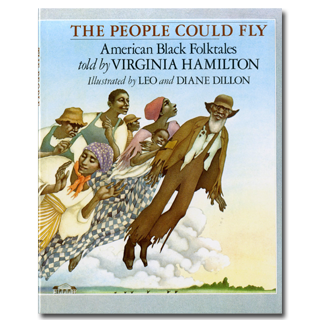
To share this remembrance of slavery in the United States with your students (sorry I couldn't give you advance notice, but one day soon will also be good) Anita Silvey recommends reading Virginia Hamilton's The People Could Fly.

If you want to educate yourself about human trafficking and one organizations's work in the fight against it in Nepal, go to the website of the Red Thread Movement.

Nerdy Book Club - Picture Books for the Secondary Classroom

Good Morning, blog friends! Just time for a quick post before a busy day.

You know how I love picture books, and that I think they are great for us older folks as well as our kiddos. 

I want you to click over to Nerdy Book Club, where you'll find "Top 10 Picture Books for the Secondary Classroom" by Kim McCollum-Clark. Kim includes books by some of my favorite authors (Cynthia Rylant, Maurice Sendak, Judith Byron Schachner), and briefly describes how you might use them as instructional tools.


From NBC, here are Kim's creds: "Kim McCollum-Clark teaches English and English Education at Millersville University of Pennsylvania, where her collection of young adult literature, graphic novels, and picture books are on constant loan to her teacher-babies. You can find her on Twitter as @KimMcCollum."

I'm impressed, and I'll be following her from now on on Twitter!

Wednesday, 22 August 2012

Exploratorium - Even if you don't live in San Francisco!

If you don't live in San Francisco, you probably can't accept Exploratorium's invitation to take your students there on a fabulous field trip. But oh, can you find things to do, make, listen to, and watch on their awesome website!

Below are just a few of the 528 things to make, see, and do:


And oh, my goodness, explo.tv! How do 1030 webcasts, videos, podcasts, and slide shows sound?
With registration, you can download videos so that you don't have to wait for buffering when showing them to your students. Here's one I downloaded from Ice Stories Polar Media Collection, "Traverse Across Frozen McMurdo Sound":


So, don't wait - hurry to the Exploratorium site and see what's in store for you and your kiddos!

Tuesday, 21 August 2012

A Private Universe - Second in a Series

As you see from the title, this is the second post about the video "A Private Universe" and its implications. Please do not read this post until you have read the first - A Private Universe - It will change your life!, and watched the video.
--------------------------------------------------------------------------------------
Okay. Now that you've seen some of the ideas that can result from teaching science by traditional methods of lecture, textbooks, worksheets, etc., let's reflect on the video itself for just a moment. I hope you'll comment on this post with your own thoughts; here are some of mine:

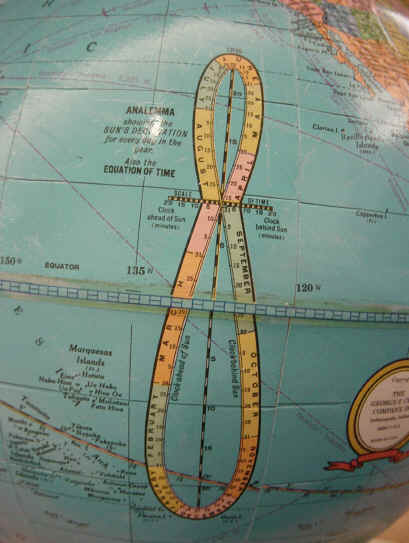
Visuals are powerful. Heather's idea about the earth's orbit apparently began with a textbook drawing, or a figure on a map or globe, of the analemma. (To learn more about this figure-8 shape that represents the changing position of the sun when viewed from a static position on the earth throughout the year, go here.) The sketch didn't fit the situation being discussed, but it caught her attention and stayed with her.


Observing while another student works with a model isn't the same as doing it yourself. Heather watched closely as the boy manipulated the model in front of the class, but did not touch it herself, so it wasn't especially helpful to her. Later she says, "We learned the phases of the moon, but we didn't learn where the moon is at those times." Indeed, textbooks typically show labeled pictures of the moon's phases, but as she says, "That makes it kind of hard, because you know what the phases are, but you don't know where the moon is. I mean, it could be over here, it could be over here...it could be practically anywhere on its orbit around."


Students can refine their own understandings. Heather reached for the globe pencil sharpener and two balls to clarify her ideas about the full moon, the new moon, and lunar eclipses. SHE knew that a drawing wasn't sufficient for the task, and her teacher confirmed, saying, "...what happened was that she had to hold the things in her hands...she took them and started working with them and figuring it out...too often that doesn't happen..." Sad, but true!

As teachers, we have to determine what our students' misconceptions are. After listening to Heather's description of light "bouncing" in space, her teacher says, "You have to realize that kids really do have the ideas coming in...they have experiences and ideas that they associate with other things...until you...straighten out those initial ideas, it kind of closes off their minds to what you're trying to get across to them..."

We must capitalize on opportunities to replace erroneous ideas with accurate ones. Heather's idea about bouncing light in space wasn't correct, but her sketch accurately represented the Law of Reflection. The next step, in my mind, would be to use mirrors, etc., to show what is correct in her idea, and proceed to what isn't.

If you are unsure how to delve into the misconceptions your students hold, I recommend:
  • Using probes such as those presented in the 4 volumes of Uncovering Student Ideas in Science. (I have all four, and I do operate a lending library for my friends!) 
  • New York Science Teacher, which has an online list of tools for addressing misconceptions.
  • DarylScience, who has an online pre-test (which we can take ourselves if we're brave enough!) that leads to his page of Student Misconceptions.  At the bottom of that page are other links.
  • Modeling instruction - for a clear though scholarly explanation of using student sketches to uncover their ideas, go to Don Yost's article Whiteboarding.
If you have other questions, please leave a comment or email me at nancymcneal@gmail.comI want to hear from you, and I hope you're reflecting on what you've seen so far. The last post in the series will have many, many resources for DOING science with your kids!

UPDATE: The final post is now online - Teaching Science Through Inquiry - Last in the Series

Chemistry/Physical Science teachers, this is for YOU! (And it's great!)

When I was teaching Physical Science, I had a set of samples of chemical elements. They were small, sealed in lucite bars, but they were so much better than pictures in a textbook. My students enjoyed them, and they were able to see some of the elements' physical properties up close.

Your students can see much, much more now that video journalist Brady Haran has created 118 videos about the elements featuring chemists from the University of Nottingham. Check it out at The Periodic Table of Videos.


This is a totally amazing site, with much more than a video for each chemical element. Extra Videos has news, travels, special occasions, and funny stuff, too. The group has also added a new collection called Molecular Videos that provide information about their favorite molecules and compounds. Here's one called "Fire Water":


This video could be used to kick off your study of chemical properties and reactions, during which you have your students investigate for themselves many other reactions.


http://www.upwardbound.unh.edu/images/chemistry.jpg
Hurry on over, and enjoy this great resource!

Monday, 20 August 2012

A Private Universe - It will change your life!

Heads up: If you teach science, this post is very important for you and especially for your students.

I first watched the video "A Private Universe" several years ago in a summer workshop, and yes, it changed my life. If I had ANY lingering idea that science could be well-taught with lectures, textbooks, worksheets, and vocabulary lists, this film blew it out of the water! 


http://www.learner.org/newimages/resources/pic_privateuniverse.jpg

Here's Annenberg's description: "This video brings into sharp focus the dilemma facing all educators: Why don't even the brightest students truly grasp basic science concepts? Interviews are held with high school students and Ivy League graduates asking them to explain what causes the seasons and the phases of the moon. Even the brightest students in the class have false ideas based on enduring misconceptions that traditional instructional methods cannot overcome." (emphasis mine)

You MUST watch it if you haven't already seen it! Go to this link on the Annenberg Learner site, scroll down to A Private Universe, and click on the Video on Demand button. The video will open in a new window. It's only 20 minutes long, and worth every minute!


And once you've seen it, we'll be ready for more posts about hands-on, minds-on science...I have some great ideas waiting for you!

UPDATE: The links below will take you to the second and third posts in this series.
A Private Universe - Second in a Series
Teaching Science Through Inquiry - Last in the Series
  

Sunday, 19 August 2012

ReadWorks.org

Reading teachers, I'm asking for your input. I discovered a FREE site this evening that looks great, but I am not a reading teacher, so you must judge its value for yourself.

ReadWorks.org, which is the new website for Urban Education Exchange, calls itself "The Solution to Reading Comprehension." It's a beautiful site, easy to navigate, and it contains hundreds of lessons that are aligned to the Common Core Standards, state standards, and six of the most popular core reading programs. The home page easily grabbed my attention with these images:


Lessons and units are for K - 4th Grade, with 20+ novel units for 5th and 6th Grades. More than 500 nonfiction passages, each of which has 5 comprehension questions, are provided onsite. Here is one example, a unit on "author's purpose" for 4th grade.


Everything is well-organized, documented, and aligned. There's a set of training videos for teachers, and a "save to my binder" button so you can mark lessons to which you want to return. The books used in lessons are not provided, so you must find them yourself, but they are well-known books that should not be difficult to locate.

I hope you'll let me know if you use this resource and how it fits in to your reading program. FREE is very good, and reading comprehension is an essential skill for every subject area, so I'm hoping it turns out to be a site I can recommend and you love to use. Let me hear from you, please. And have a great week with your kiddos!


Teachers Pay Teachers (But some give it away!)

Teachers Pay Teachers bills itself as "an open marketplace for educators, where teachers buy, sell, and share original resources." There are literally hundreds of thousands of items on the site, all created by teachers. It's a great idea - much better than buying books of worksheets, classroom organization ideas, and lesson plans from publishers - for a couple of reasons. One, proven ideas from real teachers in real schools are just worth more, and two, creative teachers can make a little money from their hard work!

But here's the thing: in addition to all of the items for sale (from under $1 and up), there are more than 40,000 items that are FREE! Many are simple - a spelling test template, for example. But check out the second page of the template below. I love the reflection piece! 

Others are much more complex, such as a complete literature and grammar unit for Jerry Spinelli's Stargirl. It's 60 pages long, with activities, etc., for every chapter of the book. Remember - this is FREE!

You can browse TPT by grade level, subject, price, and type. Wondering exactly what is meant by "type"? Well, there are 90+ types listed, from Activboard Activities to Windows Software.

So. Click right over to 


and see what other real teachers have shared with you. And please, send a thank-you email to those whose freebies you use, for their time and generosity!  

Saturday, 18 August 2012

GOOD NEWS: YouTube For Schools

I LOVE good news, and I have some for you, in case you haven't already heard!

I was frustrated near the end of my classroom career, because I knew that great resources were available on YouTube, but teachers couldn't access it at school. This was, of course, due to inappropriate content on the huge video site.

For a year or two, I would download at home videos such as Eric Carle himself reading The Very Hungry Caterpillar, take my laptop back to school, and share it with my kiddos. Then my school system subscribed to Gaggle, which gave us access to filtered YouTube. We were thrilled, and used it well.

Some teachers, however, were still left out because their systems didn't subscribe to Gaggle. But YouTube came through, launching a new portal in December called YouTube for Schools, and it's FREE!

If your school hasn't already set up a Google account to allow you access to this great resource, you can do it here. Your students will be able to watch only content from YouTube EDU or videos added by your school. And you? YouTube Teachers has playlists ready for you to access by grade band and subject area, and many are already aligned to the Common Core State Standards!

You are SO welcome for this good news flash! Hope you enjoy this great resource, and that your kiddos do, too!